
Root Rot in Plants How to Spot It, Fix It and Stop It Coming Back
Is your plant wilting, yet the soil is still wet? You are likely dealing with root rot in plants. Learn how to identify, treat, and prevent this common issue.

On this page
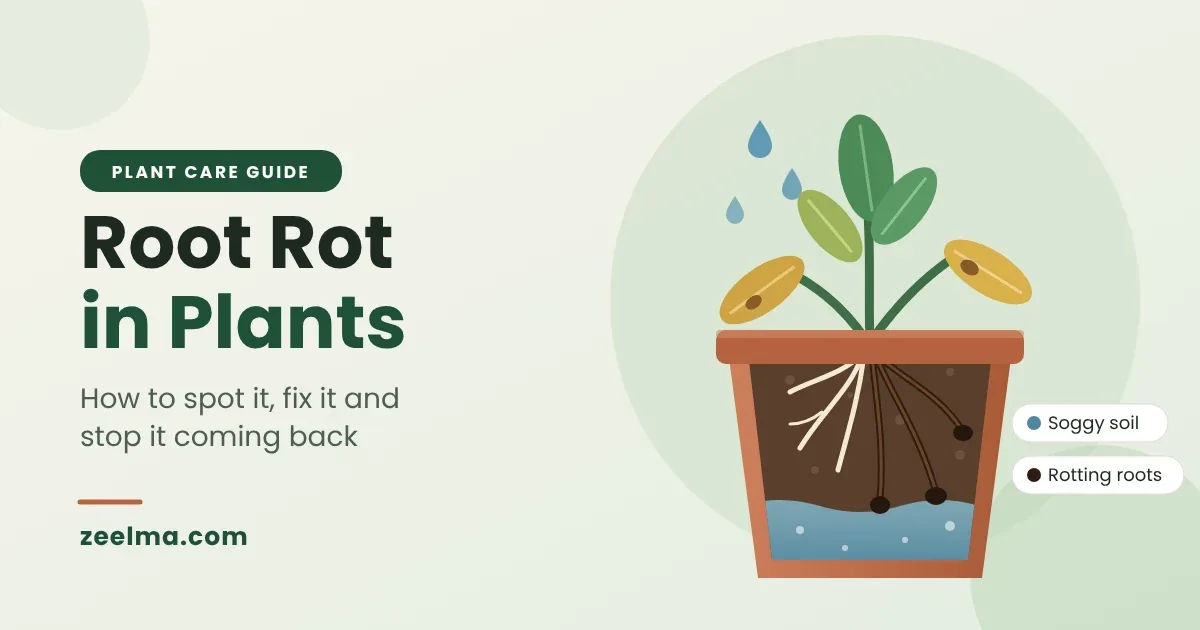
[Image: root-rot-in-plants.webp — also set as Featured Image]
Alt text: Root rot in plants: potted plant with yellow leaves, soggy soil and brown rotting roots
Your plant is wilting, yet the soil is still wet. The lower leaves are turning yellow, and every extra watering seems to make things worse. If that sounds familiar, you are most likely dealing with root rot in plants, one of the most common reasons houseplants die in Pakistani homes.
The good news? Root rot is treatable when you catch it early, and it is almost always preventable. In this guide, you will learn what causes it, how to confirm it in two minutes, and the exact rescue method we recommend at Zeelma.
Quick answer: Root rot is the decay of a plant’s roots, usually caused by soil that stays wet for too long. Look for wilting in moist soil, yellow lower leaves and soft brown or black roots with a sour smell. To fix it, unpot the plant, wash the roots, cut away every rotten root with clean scissors and repot in fresh, well-draining mix in a pot with drainage holes. After that, water only when the top 2–3 cm of soil feels dry.
What Is Root Rot in Plants?
Root rot is not one single disease. It is a general name for any problem that breaks down a plant’s root system. In most houseplants, it begins when roots sit in waterlogged soil for days at a time.
Roots need oxygen just as much as they need water. When every air pocket in the pot fills with water, the roots start to suffocate and die. Those weak, dying roots then become an easy target for soil organisms such as Pythium, Phytophthora, Rhizoctonia and Fusarium, which thrive in wet, poorly drained potting mix. Once they take hold, the rot spreads from root to root and can even reach the base of the stem.
That is what makes root rot so dangerous. The damage happens out of sight, so by the time the leaves look unwell, a large part of the root system may already be gone.
What Causes Root Rot?
Almost every case we see traces back to one of these five causes:
Overwatering. Watering on a fixed schedule instead of checking the soil first is the number one cause.
No drainage hole. Decorative ceramic pots and planters without a hole trap water at the bottom, where roots slowly drown.
Heavy, compacted soil. Plain garden soil (mitti) stays wet for days inside a pot. It needs to be opened up with compost, coco peat, perlite or coarse sand.
A pot that is too big. Extra soil holds extra water that the roots cannot use, so the mix stays soggy.
Low light and cool weather. Plants drink far less in winter. The same amount of water that was perfect in June can rot roots in December.
In Pakistan, the risk peaks twice a year: during the humid monsoon, when soil dries very slowly, and in the cooler winter months, when growth slows right down.
Signs of Root Rot in Plants
Root rot is tricky because its early symptoms look a lot like thirst. Many plant owners see a drooping plant, water it again and make the problem worse. So look for several of these signs together rather than relying on just one.
Signs Above the Soil
Leaves wilt or droop even though the soil is damp.
Yellowing starts on the lower leaves and moves upward.
Brown, soft patches appear on leaves, or the stem base turns dark and mushy.
New growth slows down or stops completely.
The soil smells sour or stays wet for a week or longer.
Tiny black flies (fungus gnats) hover around the pot.
Signs Below the Soil
The only way to confirm root rot is to look at the roots. Gently slide the plant out of its pot and check them:
Healthy roots are firm, springy and usually white to light tan.
Rotten roots are brown or black, soft and mushy.
When you pull a rotten root gently, its outer layer slips off and leaves a thin thread behind.
Rotting roots have an unpleasant, swampy smell.
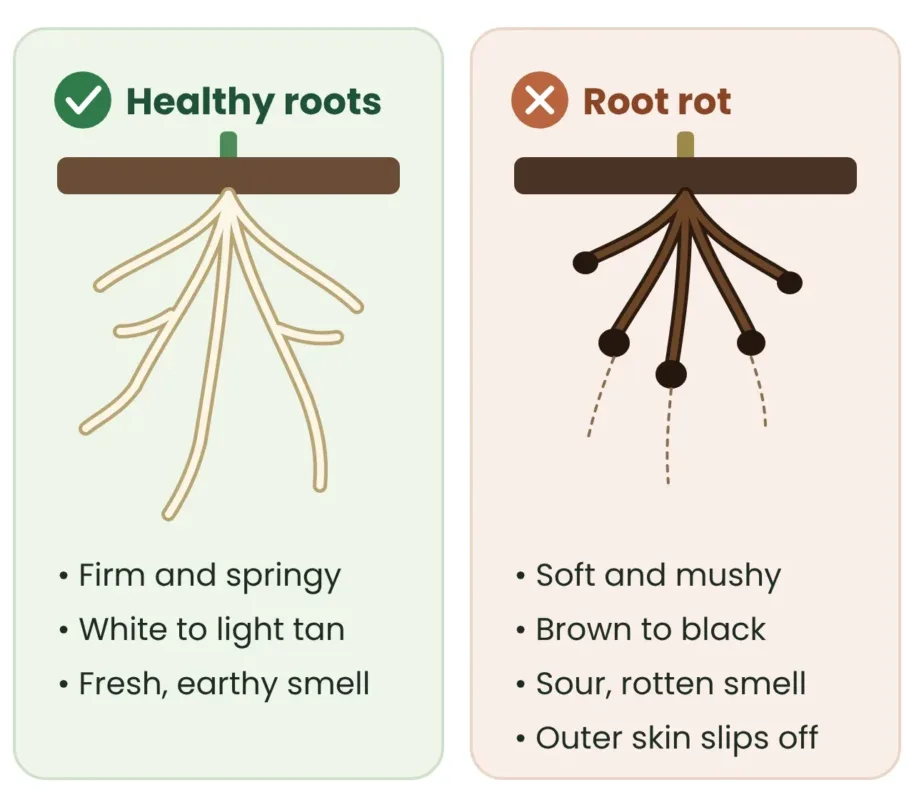
[Image: healthy-roots-vs-root-rot.webp]
Alt text: Root rot in plants compared with healthy roots: healthy roots are firm and white, rotten roots are brown and mushy
Caption: Healthy roots vs root rot: colour, texture and smell tell you almost everything.
Good to know: One yellow leaf is not a sign of root rot. Older leaves naturally yellow and drop. Start worrying when several symptoms appear together and the soil is still wet.
Root Rot or Underwatering? How to Tell the Difference
Both problems make a plant droop, so it is easy to confuse them. This side-by-side check will help you decide before you reach for the watering can.
What to check Root rot Underwatering
Soil Wet or damp for days Dry, may pull away from the pot edge
Leaves Soft, limp and yellow Crispy and dry, with brown edges
Stem base May be soft or dark Firm
Roots Brown or black, mushy, smelly Dry but firm and light in colour
After watering No change, or gets worse Perks up within a day
In short, if your plant revives within hours of a drink, it was thirsty. If it stays limp in wet soil, check the roots straight away.
How to Fix Root Rot in Plants: Step-by-Step Treatment
Act as soon as you suspect rot. The more healthy roots that remain, the better your chances. Before you start, keep clean scissors, rubbing alcohol (spirit), fresh potting mix, a pot with drainage holes and some old newspaper ready.
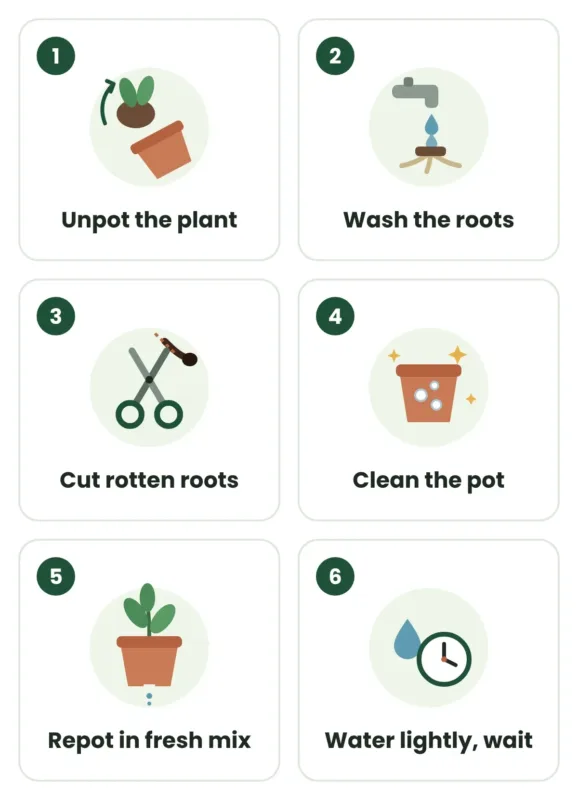
[Image: how-to-fix-root-rot-steps.webp]
Alt text: Six steps to fix root rot in plants: unpot, wash roots, cut rotten roots, clean the pot, repot, water lightly and wait
Caption: The six-step root rot rescue at a glance.
Take the plant out of its pot. Tip the pot on its side and ease the plant out by the base, not the stem. If it is stuck, run a blunt knife around the inside edge.
Remove the old soil and wash the roots. Shake off the loose soil, then rinse the root ball gently in a bucket of room-temperature water until you can see every root clearly.
Cut away every rotten root. Wipe your scissors with spirit first. Trim all brown, black and mushy roots back to firm, white tissue, and clean the blades after each cut so you do not spread the rot. Be thorough, because leftover rotten roots are the most common reason a rescue fails.
Trim the leaves as well. With fewer roots, the plant cannot support all its foliage. Remove yellow and damaged leaves first. If you lost more than half the roots, cut back up to a third of the remaining leaves too.
Disinfect or replace the pot. Never reuse the old soil. If you want to reuse the pot, scrub it clean, soak it for 10 minutes in 1 part household bleach to 9 parts water, then rinse it well.
Repot in fresh, well-draining mix. Choose a pot only slightly bigger than the remaining root ball, with at least one drainage hole. Fill it with a light, airy mix (our recipe is below) and do not press it down hard.
Water lightly, then wait. Give a small drink to settle the mix and let all the extra water drain away. Keep the plant in bright, indirect light, away from harsh afternoon sun, and skip fertiliser for 4–6 weeks while new roots grow.
Should You Use Hydrogen Peroxide, Cinnamon or Fungicide?
Many gardeners dip cleaned roots in 3% hydrogen peroxide mixed with two parts water before repotting. It can help clean the root surface, but treat it as a support step, not a cure. Cinnamon powder is a popular home remedy, although the evidence behind it is mostly anecdotal. For a valuable or badly affected plant, a fungicide labelled for root rot can help; always follow the dose on the label. Either way, the real cure stays the same: remove the rotten roots and fix the watering.
What If Most of the Roots Are Gone?
If almost no healthy roots remain, the plant may not recover in soil. In that case, save it through propagation instead. Take healthy stem or leaf cuttings from the top of the plant and root them in water or fresh mix. Money plant (pothos), snake plant, ZZ plant, monstera and most succulents grow back easily this way.
How Long Does It Take a Plant to Recover?
Expect a quiet period first. For the first two to three weeks, the plant may look no better, and it may even drop a few more leaves. That is normal while it focuses on growing new roots.
Signs of recovery, such as fresh leaves and firmer stems, usually show up within four to eight weeks, depending on the plant and the season. Plants recover faster in spring and early summer, when they are actively growing. Meanwhile, resist the urge to water “just in case” or move the pot around every few days.
How to Prevent Root Rot in Plants
Prevention is far easier than treatment. Build these five habits, and root rot will become a rare visitor.
Water by Touch, Not by Calendar
Push one finger into the soil up to the first knuckle, which is about 2–3 cm deep. If it feels dry at your fingertip, water slowly until water runs out of the drainage hole. If it still feels damp, wait and check again in two or three days. For succulents, cacti and snake plants, let the mix dry out almost completely between waterings.
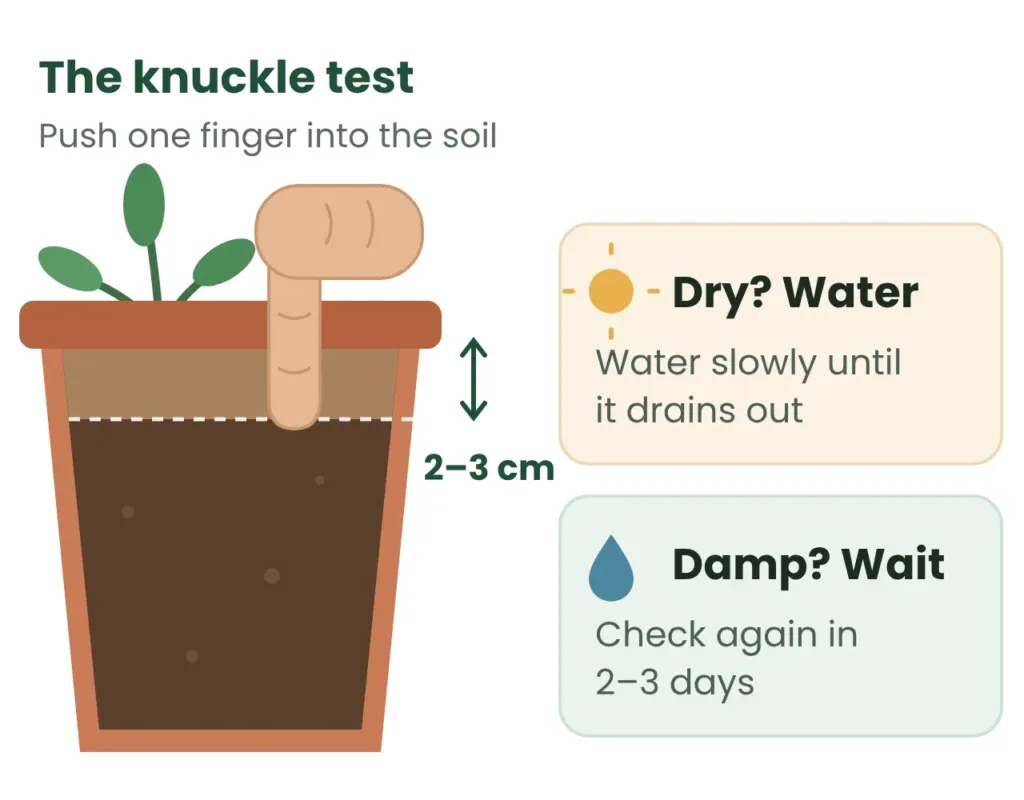
[Image: knuckle-test-watering-plants.webp]
Alt text: Knuckle test to prevent root rot: push a finger 2 to 3 cm into the soil, water if dry, wait if damp
Caption: The knuckle test is the simplest way to stop overwatering.
Always Use Pots With Drainage Holes
Love a decorative planter with no hole? Use it as an outer cover only. Keep the plant in a plastic nursery pot inside it, and empty any water that collects in the cover after watering. Terracotta pots are a smart choice for plants prone to rot, because the clay breathes and dries faster than plastic.
Use a Light, Well-Draining Potting Mix
Here is a simple, reliable mix for most indoor plants in Pakistan:
2 parts coco peat or well-rotted compost
1 part garden soil
1 part perlite, coarse river sand or small brick pieces
For succulents and cacti, make sand or perlite about half of the mix. You can also find ready potting mix and pots with proper drainage in the Zeelma online plant shop.
Adjust Watering for the Season
Season How often to check Watering tip
Hot, dry months (April–June) Every 2–3 days Water deeply once the top layer dries
Monsoon (July–September) Before every watering Humidity slows drying, so skip a turn if the soil is still damp
Winter (November–February) Once a week Most indoor plants need half the summer amount, or less
Give Plants Enough Light and Air
Plants in bright spots use water much faster than those in dark corners. So, place moisture-loving plants near a bright window and avoid crowding pots together. Also, never let a pot sit in a saucer full of water for more than 30 minutes.
Plants Most Prone to Root Rot
Some of the most popular indoor plants are also the most sensitive to wet roots. Take extra care with these:
Plant Why it is at risk Care tip
Snake plant Stores water in thick leaves Water every 2–4 weeks; let the soil dry fully
ZZ plant Water-storing rhizomes rot easily Water only when the pot feels light and dry
Succulents and cacti Built for dry, desert soil Gritty mix in a terracotta pot
Aloe vera Fleshy leaves hold plenty of water Deep but rare watering, full drainage
Money plant (pothos) Often kept in pots without holes Make sure the pot drains freely
Peace lily Droops quickly, which invites overwatering Check the soil before you water
Fiddle leaf fig Dislikes wet feet and oversized pots Repot only one size up at a time
Looking for plants that forgive the odd mistake? Browse our indoor plants collection for easy-care options that suit Pakistani homes.
Frequently Asked Questions About Root Rot
Can a plant recover from root rot?
Yes, as long as some firm, healthy roots remain. Remove every rotten root, repot in fresh, well-draining mix and water carefully. If no healthy roots are left, take cuttings from the healthy top growth and propagate a new plant.
How quickly does root rot kill a plant?
It depends on the conditions. In a pot that stays slightly too wet, decline can take weeks or months. In hot, waterlogged soil, a plant can collapse within days, which is why checking the roots early matters.
Should I water a plant after treating root rot?
Give it one light watering right after repotting to settle the mix, and let the excess drain away. After that, water again only when the top 2–3 cm of soil feels dry.
Can root rot spread to other plants?
Yes. The organisms behind it can travel through infected soil, drainage water and dirty tools or pots. Keep a sick plant apart until it recovers, clean your tools after use and never reuse its old soil.
Is root rot only caused by overwatering?
Overwatering is the main cause, but it is not the only one. Pots without drainage, heavy soil, oversized pots, cold temperatures and already-infected plants can all lead to root rot.
Can I reuse soil from a plant with root rot?
No. Old soil can carry the organisms that caused the rot, so throw it away and always start with fresh potting mix.
Need Help Saving Your Plant?
Not sure whether your plant can be saved? Explore more easy guides in our plant care section, or shop healthy plants, drainage pots and fresh potting mix, delivered across Pakistan.
Sources and further reading:
Root Rots of Houseplants – Iowa State University Extension
Root and Crown Rots – University of Wisconsin–Madison Extension
Root Rot in Landscape Plants – Purdue University Extension

Share your experience