Snake Plant Care Guide: Watering, Light, and Growing Tips (2026)

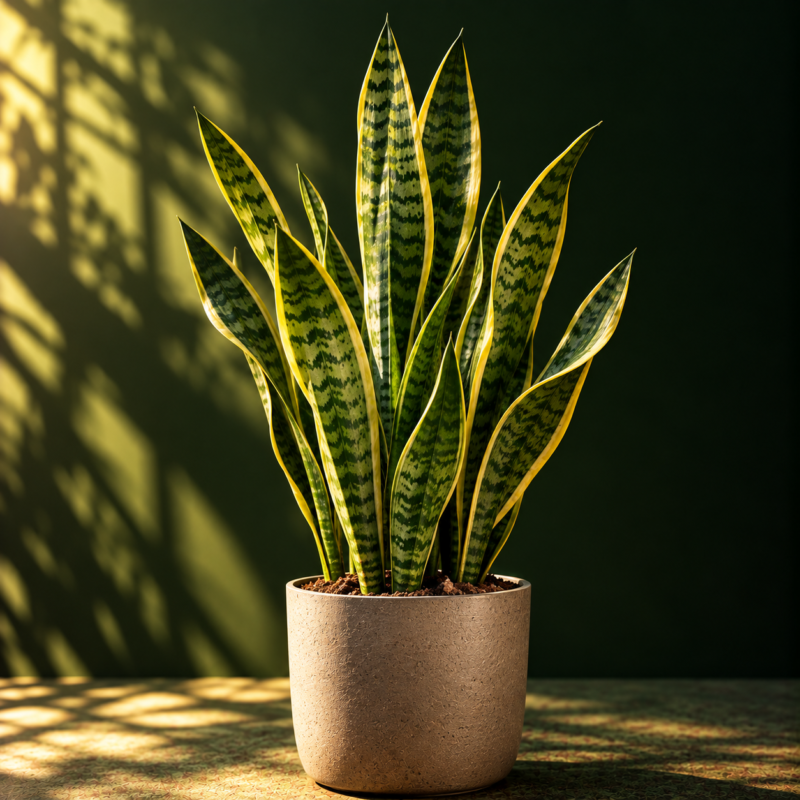
The snake plant (Dracaena trifasciata, once known as Sansevieria) is one of the most forgiving houseplants you can grow. It tolerates low light, goes weeks without water, and handles dry indoor air. Most snake plant problems come from one mistake: too much water.
This guide explains exactly how to care for a snake plant, whether you live in a small apartment in a cold city or a warm home with bright afternoon sun.
Quick Answer: How to Care for a Snake Plant
- Light: Bright indirect light is best, but it grows in low light too.
- Water: Let the soil dry out completely, then water thoroughly. In most homes this means every 2 to 6 weeks.
- Soil: Use a fast-draining mix, such as cactus or succulent soil with added perlite.
- Pot: Choose a pot with a drainage hole. Only go up one size when repotting.
- Temperature: Keep it between 15°C and 29°C (60°F to 85°F). Protect it from frost.
Why the Snake Plant Is So Easy to Grow
The snake plant stores water in its thick, upright leaves. It also uses a photosynthesis pathway called CAM, which lets it open its pores at night and conserve water during the day. This is why it survives dry spells that would kill most houseplants.
That same design is also why it hates wet roots. Its rhizomes (the thick underground stems) rot quickly in soggy soil. Keep that in mind and most of the guesswork disappears.
How Often Should You Water a Snake Plant?
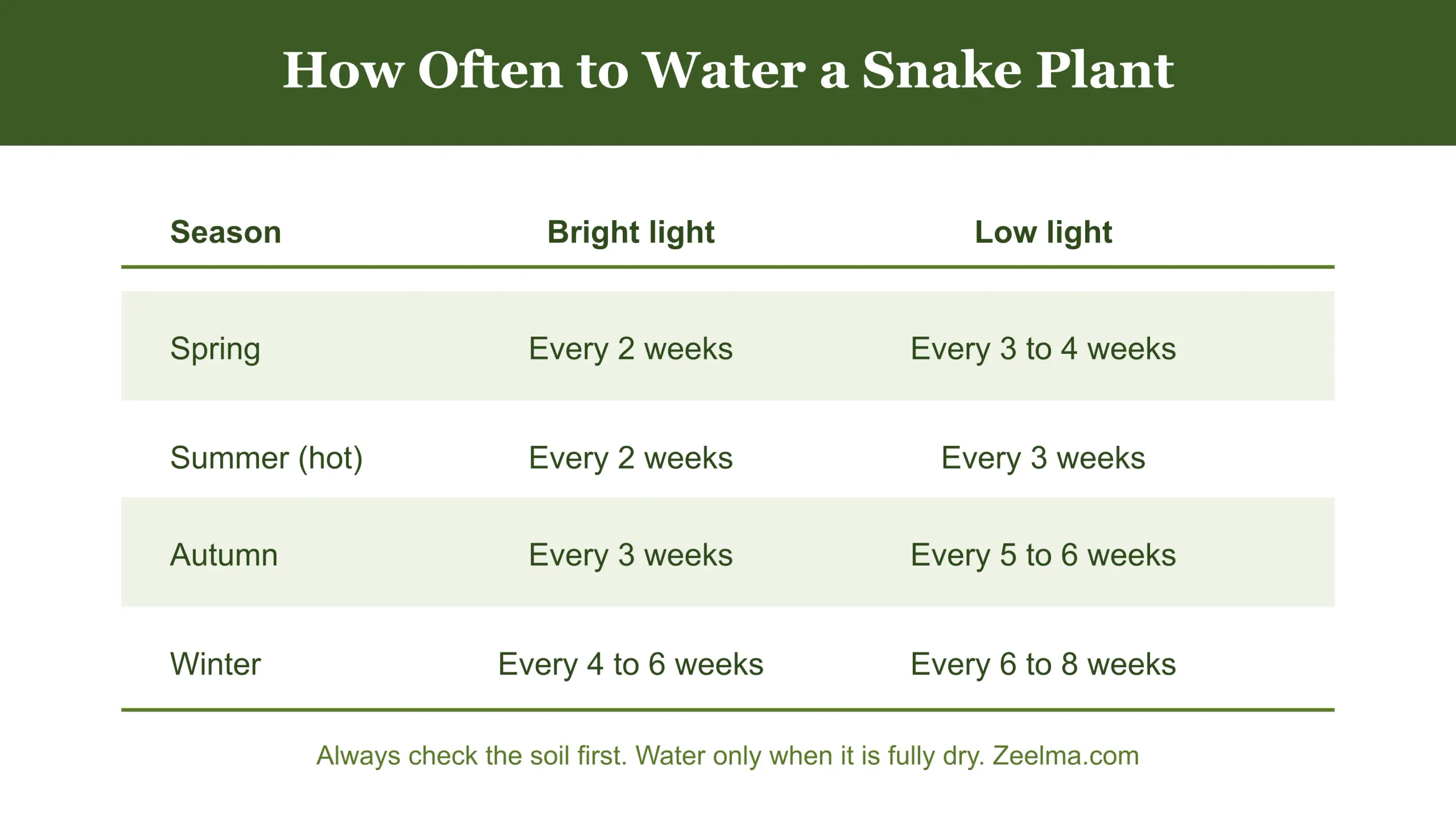
Watering is the single most important part of snake plant care. Use a seasonal approach rather than a fixed calendar:
| Season | Bright light | Low light |
|---|---|---|
| Spring | Every 2 weeks | Every 3 to 4 weeks |
| Summer (hot) | Every 2 weeks | Every 3 weeks |
| Autumn | Every 3 weeks | Every 5 to 6 weeks |
| Winter | Every 4 to 6 weeks | Every 6 to 8 weeks |
The Finger Test
Push your finger 3 to 5 cm (1 to 2 inches) into the soil. If it feels dry, water. If it feels even slightly damp, wait. When you water, soak the soil thoroughly and let all the excess drain out. Never let the pot sit in a saucer of water.
Signs of Overwatering
- Yellow or mushy leaves at the base
- A soft, dark stem or rhizome that smells bad
- Soil that stays wet for more than a week
- Leaves that fall over or pull away easily
Signs of Underwatering
- Wrinkled or curled leaves that look thin
- Brown tips that feel dry and crispy
- Soil that pulls away from the pot edges
Underwatering is easy to fix. Overwatering can be very hard to fix. If you are unsure, wait one more week.
Light Requirements
Snake plants are famous for surviving low light, but “survive” and “thrive” are different things.
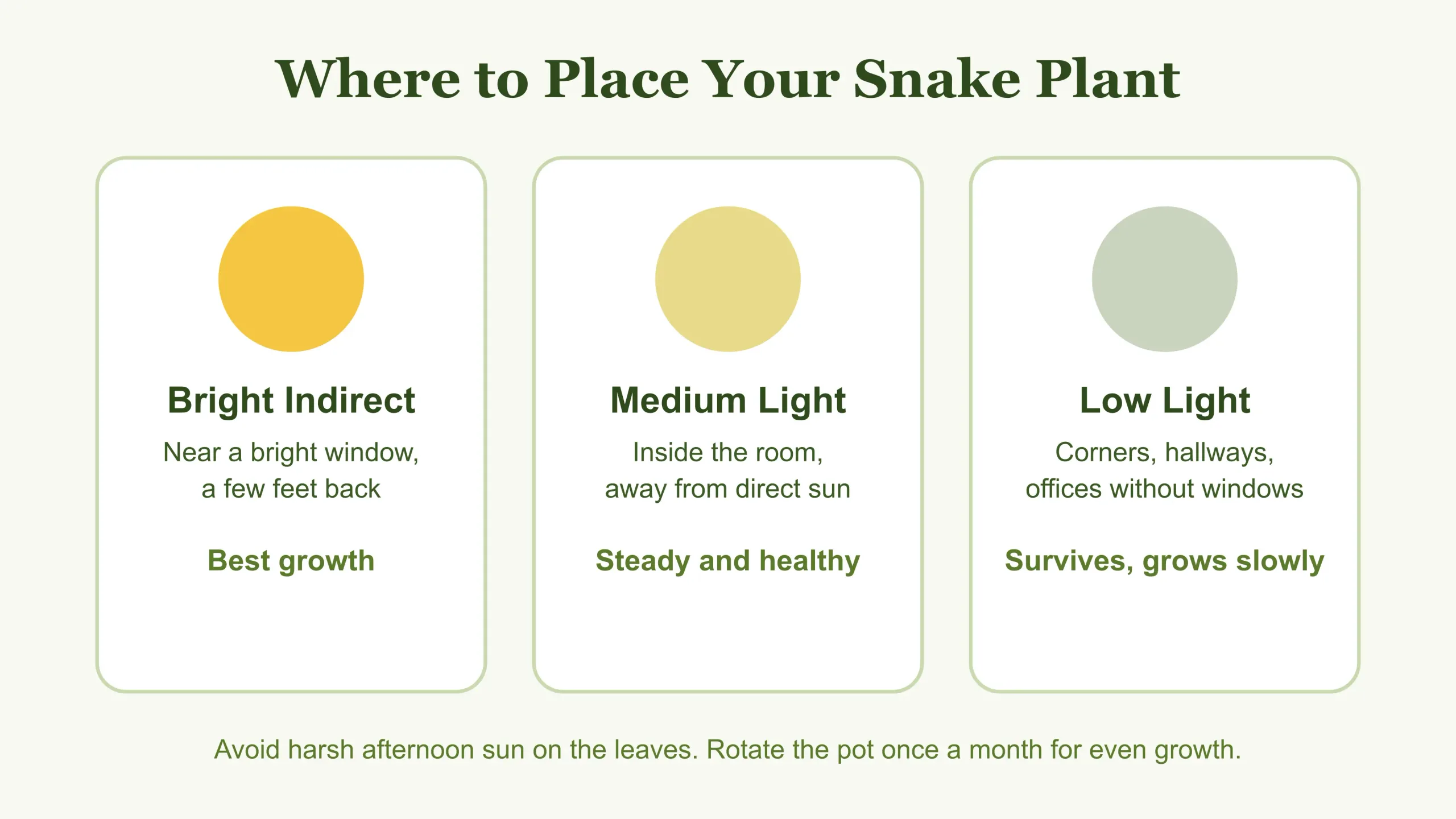
- Bright indirect light (near a bright window, a few feet back) produces the fastest growth and the strongest leaf patterns.
- Medium light (inside a room away from direct sun) gives steady, healthy growth.
- Low light (a hallway, a corner, an office without windows) keeps the plant alive, but it grows very slowly.
Direct afternoon sun can scorch the leaves and leave pale or brown patches. If you move a plant from a dim spot into bright light, do it gradually over two weeks.
Rotate the pot every month so all sides get even light and the plant grows straight.
Best Soil and Pot Choices
Soil
Snake plants need soil that drains quickly. A standard potting mix holds too much water. Try one of these:
- A cactus or succulent potting mix
- Regular potting mix mixed 1:1 with perlite, pumice, or coarse sand
- Add a little charcoal to reduce odor and keep the mix fresh
Pots
- Choose a pot with at least one drainage hole. This is non-negotiable.
- Terracotta is excellent because it lets soil dry faster through its walls.
- Ceramic or plastic pots also work, but water less often.
- Choose a pot only 2 to 5 cm (1 to 2 inches) wider than the root ball. A large pot holds too much water.
How to Repot a Snake Plant
Snake plants like being slightly root-bound. Repot only every 2 to 3 years, or when roots grow out of the drainage hole.
The best time to repot is spring or early summer, when the plant is actively growing.
- Water the plant two or three days before repotting, so the roots are not wet and brittle.
- Gently remove the plant from its pot. Knock the sides if it sticks.
- Shake off old soil and check the rhizomes. Cut away any black, mushy roots with clean scissors.
- Let the roots dry for a day if they look damaged.
- Place the plant in the new pot with fresh, dry soil. Do not water for at least a week.
Temperature and Humidity
Snake plants grow well in normal home temperatures, between 15°C and 29°C (60°F to 85°F). They tolerate dry air very well, so they do not need misting or humidity trays.
Keep the plant away from cold drafts, air conditioners blowing directly on it, and heaters that dry the air hard. Frost damage shows up as soft, dark, collapsing leaves.
In humid monsoon or rainy seasons, be extra careful. Humid air slows soil drying, so you may need to water less often even though the weather feels “wet.”
Feeding Your Snake Plant
Feed lightly, and only during spring and summer. Use a balanced liquid fertilizer at half the strength on the label, once a month. Do not feed in autumn or winter. Too much fertilizer causes brown leaf tips and salt buildup in the soil.
How to Propagate a Snake Plant
You can grow new plants for free.
Leaf cuttings:
- Cut a healthy leaf at the base with a clean, sharp knife.
- Let the cut end dry for 2 to 3 days until a callus forms.
- Place the leaf in dry, well-draining soil, cut end down, about 2 cm (1 inch) deep.
- Wait 3 to 4 weeks before watering lightly. Roots and new pups usually appear within 6 to 8 weeks.
Division: When repotting, separate clumps of pups from the mother plant. Each division must have its own roots.
Note that leaf-cut plants may take months to show new growth, so be patient.
Common Snake Plant Problems and Fixes
Yellow leaves at the base: Usually overwatering. Let the soil dry fully and check the roots.
Soft, mushy stem: Root or stem rot. Remove the plant, cut away rotten parts, let it dry for a day or two, and repot in fresh dry mix.
Brown tips: Could be underwatering, too much fertilizer, or low humidity. Trim only the brown part, following the leaf’s natural shape.
Wrinkled leaves: Thirst. Water thoroughly and the leaves will firm up in a few days.
Pale, faded stripes: Too much direct sun. Move the plant to a shadier spot.
Leaning or falling over: Not enough light, or the pot is too small or too heavy on one side. Move it to brighter light and check the root system.
Pests: Snake plants resist most pests. Watch for mealybugs in leaf joints. Wipe them off with a cotton swab dipped in rubbing alcohol.
Is the Snake Plant Safe for Pets and Children?
No. Snake plants contain saponins, which can cause vomiting, drooling, and stomach upset if eaten by cats, dogs, or children. Keep it out of reach, or choose a pet-safe alternative if you have curious animals.
Are Snake Plants Good for Indoor Air?
You may have read that snake plants clean indoor air. The original 1989 NASA study tested sealed chambers, not real homes. Later reviews found that the effect in ordinary rooms is very small. A snake plant is still a lovely, low-maintenance plant that adds greenery, but do not rely on it to purify your air. Good ventilation does much more.
Best Snake Plant Varieties for Beginners
- Laurentii: Yellow-edged leaves, the most common variety.
- Hahnii (bird’s nest): A compact, rosette shape that suits small spaces.
- Moonshine: Silvery-green leaves, grows well in bright indirect light.
- Cylindrica: Tall, round, sword-like leaves. Good for a modern look.
All of these care for the same way. Choose based on looks and the space you have.
A Simple Weekly Snake Plant Routine
You do not need to check your plant every day. Try this:
- Once a week: Look at the plant. Check for yellow leaves, pests, and wobbling.
- Every 2 to 6 weeks: Use the finger test. Water only when the soil is dry.
- Once a month (spring and summer): Feed at half strength, if you wish.
- Once a month: Rotate the pot for even growth.
- Every 2 to 3 years: Repot into a pot one size larger.
Shop Snake Plants and Plant Care Supplies at Zeelma
If you are starting from scratch, you will need a healthy plant, a drainage pot, and a fast-draining mix. Zeelma stocks snake plants and other low-maintenance houseplants, along with pots, potting mix, and simple tools to get you started.
Tip: Choose a plant that already has healthy roots and firm, upright leaves. Ask for a plant that has been acclimatized to indoor light if you live in a low-light home.
FAQ
How often should I water my snake plant?
Water only when the soil is completely dry. In most homes this means every 2 to 6 weeks, depending on the season, light, and pot size. In winter, water much less often.
Can a snake plant live in low light?
Yes. It survives in low light, but grows slowly and may need more care with watering. Bright indirect light gives the best growth.
Why are my snake plant’s leaves turning yellow?
The most common cause is overwatering. Check the soil and roots, reduce watering, and make sure the pot drains well. Remove any yellow leaves at the base.
Do snake plants need fertilizer?
They do not need much. Feed once a month during spring and summer with a balanced liquid fertilizer at half strength. Skip feeding in autumn and winter.
What is the best soil for a snake plant?
A cactus or succulent mix, or a standard potting mix mixed with perlite or pumice. The soil must drain quickly.
How big do snake plants get?
Indoor snake plants usually reach 60 to 120 cm (2 to 4 feet) tall, depending on the variety and growing conditions. Growth is slow.
Is the snake plant toxic to pets?
Yes, it is mildly toxic if eaten by cats, dogs, and children. Keep it out of reach.
Can I grow a snake plant in water?
Snake plants can root in water, but they often rot over time. Soil is the better long-term choice.
Image Plan (3 images)
Image 1: Featured image (hero)
Image 2: Watering chart
- File: snake-plant-watering-chart.png
- Alt text: Chart showing how often to water a snake plant by season and light level
- Placement: directly under the “Ho Often Should You Water a Snake Plant?” heading
Image 3: Light guide
- File: snake-plant-light-guide.png
- Alt text: Three cards showing bright indirect, medium, and low light placement for a snake plant
- Placement: directly under the “Light Requirements” heading
Give each image a title that matches the file name, and fill the caption field with a short sentence, for example “Water only when the soil is fully dry.”
Notes for Setup
- The blog system builds the table of contents, FAQ schema, share buttons, and related articles from this content automatically. Every H2 becomes a TOC entry, and the H2 “FAQ” with H3 questions creates the FAQPage schema.
- Use the “Quick Answer” section as-is. It is written so AI search tools (ChatGPT, Perplexity, Google AI Overviews) can quote it directly.
- Before you publish, delete the old demo posts (“Black Interior Bathroom,” “Drawings Can Be Made Easily,” and the others) so the blog contains only plant articles.
- After publishing, purge the LiteSpeed cache and check the post on your phone.